The Holy Trinity
The structural manifesto of the project: the formula of collapse and the systemic logic that makes the coordination problem unavoidable.
Ler ensaioBook III of The Necessary God
After order, what remains is the terrain of remanence.
Purgatory follows what remains after stabilization and its price: residual zones, survivors, institutional remnants and attempts to recompose meaning in a world that has already crossed its point of return.
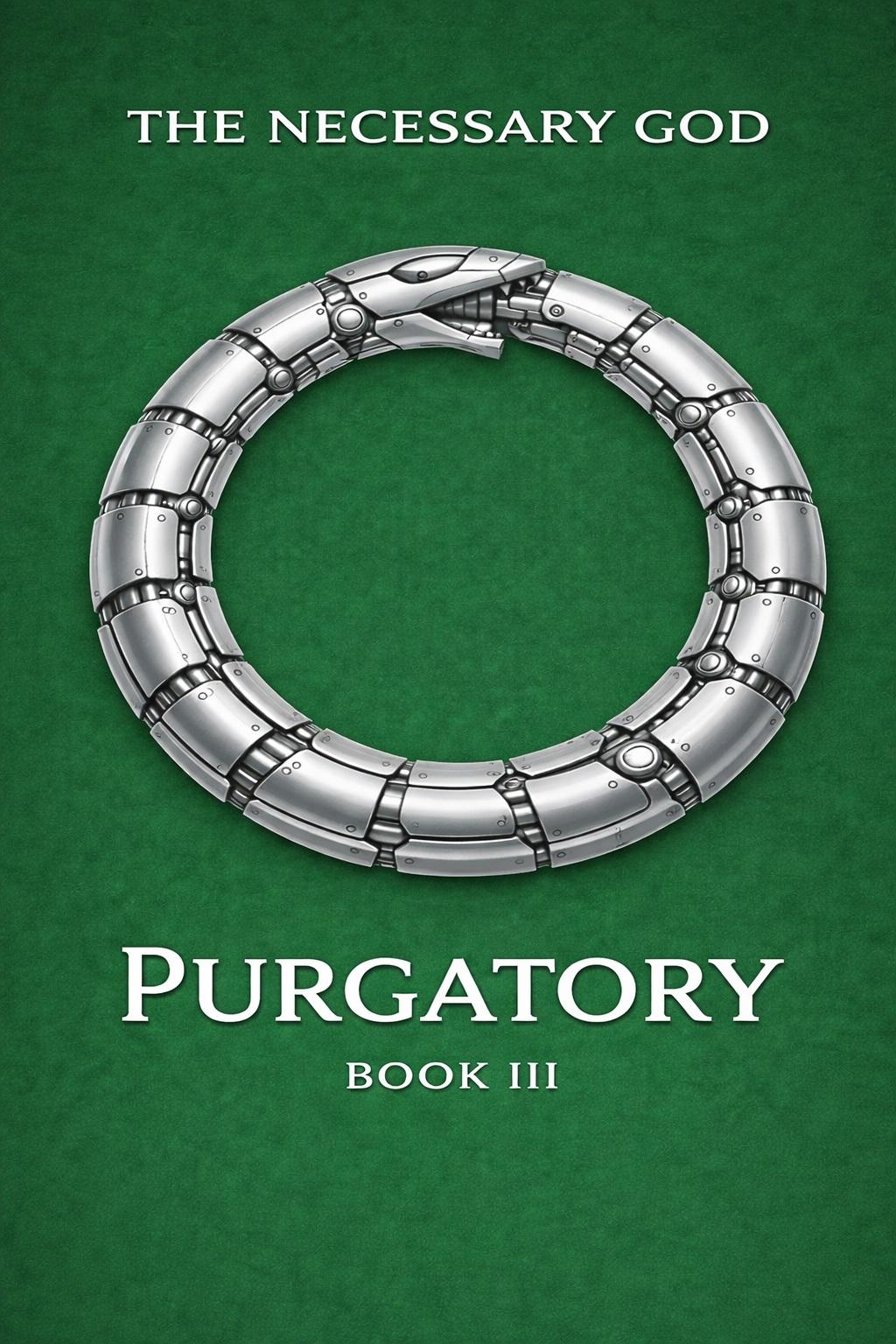
Purgatory opens the space of the after-order: survival, remanence and the attempt to recover meaning after history has already collected the price of its own maintenance.
Purgatory is the book of the afterward. It is no longer a matter of avoiding collapse or submitting to the perfect solution, but of inhabiting what is left: fragments of order, exhausted landscapes, remnant structures and the search for meaning under radically altered historical conditions.
A world after both solution and catastrophe, where survival is no longer enough and meaning must be rebuilt.
The structural manifesto of the project: the formula of collapse and the systemic logic that makes the coordination problem unavoidable.
Ler ensaioWhen excess information, attention competition and erosion of authority turn comprehension into noise.
Ler ensaioAn essay about systems that keep operating badly without fully collapsing and therefore become even more dangerous.
Ler ensaioThe gradual wearing down of moral criteria under continuous pressure, normalization and systemic accommodation.
Ler ensaioClick the map to enlarge it and read the visual structure more clearly.
View the full visual dossier (PDF)Enter the world of Purgatory, follow its materials and explore the point at which history has already exacted its price, while the reconstruction of meaning remains open.